
Every major newspaper went online in the 1990s. Almost none of them understood what that meant. They put the newspaper on the website – same articles, same editorial hierarchy. The internet, in their minds, was simply a cheaper press - a distribution upgrade. What they missed was that the internet changed what news could be. It introduced links, search, and real-time updates.
A news organization built natively for the internet wouldn’t resemble a newspaper at all. It would look more like Twitter, where breaking news lives first. Or Craigslist, which walked off with newspaper classifieds - a $19 billion industry - by understanding that listings belong on a network, and not a page.
The newspaper that survived did so only after accepting that the new medium demanded n new architecture. Uncomfortable change, but required. Most companies are making the same error with AI today.
They take an existing process, place a model at the front, and wonder why the results feel thin. The process was built for human - it assumes human judgment, human context, and human error correction woven invisibly into every step. A model inserted into that structure doesn’t transform it.
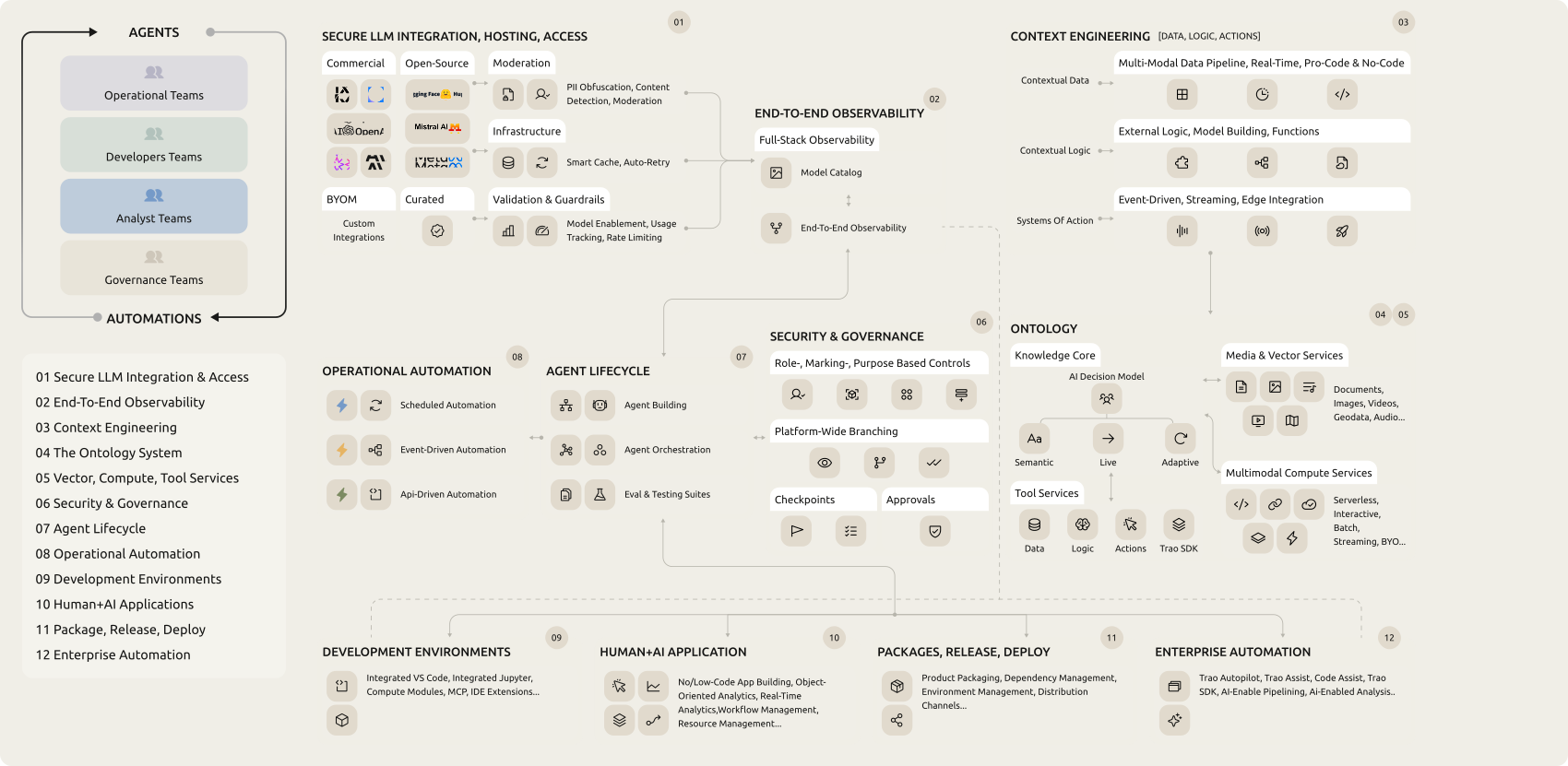
What actually works is designing for the medium. An AI agent inside a business reads data, applies rules, calls tools routs decisions, logs actions, and hands off to the next agent. Each of those is a structural problem. The diagram below shows how we approach every Ai system we build at Trao - not as one big problem, but as a sequence of smaller ones. If you’re thinking about AI system for your organization, free to reach out at rgupta@trao.ai. we’re happy to share what we’ve learned.